The Sensory WorldChapter II · Friday 20 November 2026
The outsider at the long table
A Dutch chemist learned perfume in Grasse, learned teamwork in New York, and found his voice selling to the edges of Europe. Then Vivienne Westwood asked him for a boudoir.
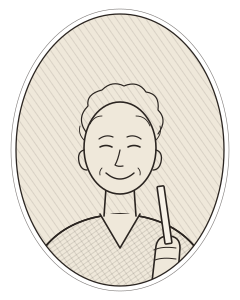
In New York, Martin Gras remembers, the perfumers sat around one big table. They smelled one another’s trials and handed out advice across it. Paris, when he got there, was different. It is a good trade, he said in a filmed interview for the Per Fumum foundation in 2017, recorded in Saint-Rémy-de-Provence, but a very competitive one, and hard above all in France, where perfumers still work too much alone. The craft, as he described it, needs three things at once: an idea, a memory, and a good nose; working as a team makes it easier.
Gras, born in the Netherlands in 1941, came to the table sideways. While studying chemistry he joined the Dutch house Polak & Schwarz, later part of IFF. Deciding he wanted to compose rather than analyse, he moved to Grasse in 1970 and entered the Roure perfumery school, then spent six years with Roure’s teams in New York under Jean Amic, according to Per Fumum’s account of his career. He would have stayed. His wife did not want to stay in the United States, he said; otherwise he would have remained there.
Each one of those old fragrances was so beautiful and so complete. I wanted a fragrance like that but more modern.
A foreigner in Paris
Paris was crowded with talent. Gras named Pierre Bourdon and Édouard Fléchier among the perfumers already there, with Michel Almairac wanting to come too, and the evaluator Jean-Louis Sieuzac, who had the knack of finishing a perfume. The big projects went to them, he said, and it was very hard for a foreigner like him to make his way in Paris.
His way out was languages. He spoke five, and asked to work for export. The opening came at Dragoco, the German house that would merge with Haarmann & Reimer in 2003 to form Symrise. There he worked for the Paris market but also for Spain, England and Scandinavia, which, he said, is how he came to work for Vivienne Westwood. He found it easy, he added, to work with the English, the Spanish and the Scandinavians. When he retired in 2004, Women’s Wear Daily put his time with Dragoco and Symrise at 23 years.
The men’s decade
The work that made his name came in the second half of the 1980s and arrived in men’s bottles. Lapidus pour Homme (Ted Lapidus, 1987) is a fougère in the old aromatic register: lavender, thyme, basil and petitgrain at the top, juniper and artemisia beneath, and a base of oakmoss, incense, amber and sandalwood, on the pyramid Parfumo publishes. 1881 pour Homme (Cerruti, 1990) is drier and greener: cumin, blackcurrant and basil, then lily of the valley, rose and ylang-ylang, settling on balsam fir, musk and patchouli. One is bark and herbs; the other a linen shirt with a little sweat at the collar. WWD’s notice of his retirement listed them first, with Bleu Marine for Pierre Cardin.
Westwood’s boudoir
Boudoir was Westwood’s first fragrance, made under a licence with Lancaster; in June 1998 WWD reported it would be introduced at Harvey Nichols in London and Leeds on 1 September. In the same report Westwood told WWD’s James Fallon what she was after: the sexier edge of the classic perfumes of her youth, Schiaparelli’s Shocking among them. “Each one of those old fragrances was so beautiful and so complete,” she said. “I wanted a fragrance like that but more modern.”
Gras, then senior perfumer at Dragoco, said he built it by dissecting her career: clothes that exaggerated the wearer’s femininity, constant borrowing from fashion history with a twist, and “the surprise, because everything Vivienne Westwood does is unexpected”. He put viburnum in the top note, a material he said had never been used in perfumery before, to pull the scent between green and oriental. The heart was red English roses with cardamom, coriander and cinnamon; the base, what Westwood called an “animal” element, amber, vanilla and sandalwood. Parfumo’s pyramid adds aldehydes, orange blossom, marigold and hyacinth above, carnation, jasmine, narcissus and orris in the middle, and tobacco flower and patchouli below. It reads like a dressing table with the drawers open: powder, spice and a warm skin note that Westwood was right to call animal.
Two years later he made her Libertine (2000), a fruity chypre that opens on pineapple, grapefruit and passion fruit and closes on oakmoss and labdanum: Boudoir’s younger, brighter sister.
After the lab
In 2004 Gras left Symrise. Per Fumum records that he then went back to school, studying genetics and molecular biology as they apply to perfumery, which is an unusual retirement for a man who had spent four decades on the other side of the bench. The interview leaves a plainer portrait than the bottles: a chemist who wanted the long table, didn’t find it in Paris, and built one of his own out of export markets and other people’s languages.